
As a tech services company, Ola has never been in hardcore manufacturing. And unlike in ride hailing, which is a two-player market (Uber is the only other competitor), in two-wheelers it faces many entrenched players. But most of all, rivals say Ola's targets are out of sync with most, even ambitious, projections.

Gold and diamond retail chain Malabar Gold & Diamonds will be investing Rs 1,600 crore in FY22 to launch 56 stores globally with 40 across India and 16 internationally in FY22 to further boost its retail presence across the globe. The move is expected to generate over 1,700 jobs. In India, the expansion strategy is centred in states like Tamil Nadu, Telangana, Andhra Pradesh, Karnataka, Maharashtra, Delhi, West Bengal, Uttar Pradesh, Odisha and Kerala. Internationally, the expansion will be in markets such as Singapore, Malaysia, Oman, Qatar, Bahrain and UAE.

Metal prices from copper to aluminum and tin have shot up by about 7-32 per cent in the past three months.

Disney-Star generated advertising revenue of over Rs 27 billion for IPL 2020.

Koo has so far raised $4.1 mn in Series A funding from existing investors Accel, Kalaari Capital, Blume Ventures and 3one4 Capital.

Italy may be the home of premium buffalo mozzarella cheese, but India could soon give the country a run for its money in this regard. India's largest dairy cooperative, Amul, has submitted a plan to the government, aiming to turn the country into a global hub for the export of mozzarella cheese made from buffalo milk, which is sold at a hefty premium around the world. Mozzarella cheese is one of the products identified by the government for support under its Rs 10,900 crore production-linked incentive scheme (PLI), to give a massive push to food processing exports as well as to build Indian food brands.
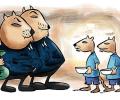
Individuals flew the flag for philanthropy in FY20, escalating their contribution significantly in comparison with company and foreign fund donations, according to the Dasra/Bain & Co India Philanthropy Report of 2021. Funding by individual philanthropists went up by 42 per cent from Rs 21,000 crore in FY19 to Rs 30,000 crore in FY20.
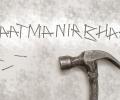
Recently, Prime Minister Narendra Modi met over 40 CEOs across broad swathes of industry, ranging from makers of mobile devices, auto components, food products to telecom networking equipment and pharmaceuticals. The agenda: To discuss how to make India an integral part of the global supply chain. The focus of the discussion would be the much touted yet not so well understood production-linked incentive scheme (PLI), the centrepiece of the government's drive to massively boost the manufacturing sector. To do so, the government has created a war chest of over Rs 197,000 crore to be paid out as incentives to over 14 industries in five years. There are three objectives to the scheme, two explicitly stated, one implied.

From omnichannel to AI and 3D technology, the fashion industry is in the middle of a digital revolution.

Zostel could get upwards of $600 million if arbitration goes through.

Fresher hiring is expected to more than double compared to last year.

Over 10 Indian start-ups with total valuations of $84 billion (some are planning fresh fund-raising) are bracing to launch initial public offerings (IPOs) in the next 36 months. While the size of their IPOs is under discussion, estimates are that they would together raise a minimum of over $8-10 billion during the initial listing.

Several factors have held India back. One is DoT policy somersaults and lack of clarity on whether to or not to ban Chinese gear makers.

The Big Two telecom companies have accelerated their moves towards this next-gen technology, though they have chosen very different routes to getting there.

Today, Vachani's public-listed company, Dixon Technologies, has gone beyond manufacturing just television sets. Armed with private equity funding from Motilal Oswal eight years ago, it has transformed itself into a Rs 4,400 crore electronic manufacturing services major, which now straddles lighting products, home appliances, feature phones, LED bulbs, amongst others. A two-part series looks at how two home-grown manufacturers are leveraging the govt's production-linked incentive scheme.

Although residential sales faced a major set back in Q2, they made a comeback with help of pent up demand.

In December, over 1.7 million people have checked in over the weekends.
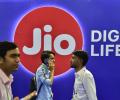
Surajeet Das Gupta explains why Mukesh Ambani's target is by no means impossible.

Just a few weeks ago, the Centre has come out with the long-awaited Motor Vehicle Aggregator Guidelines, which have drawn a dismayed response from the companies concerned.

iPhone SE 2020 is one of the popular phones like Apple 11, which is the biggest seller in the domestic market.
 © 2026 Rediff.com - Advertise with us - Disclaimer - Privacy Policy - Sitemap - Feedback - About us - Terms of use - Grievances